
|
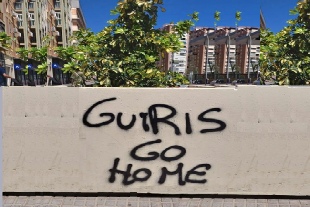
Until recently, I viewed Málaga’s growing movement against ‘overtourism’ with scepticism and detachment. During the eleven years that I’ve lived in Andalucia, this gorgeous city has always been a tourist hub – which is good, because tourism drives Spain’s economy, accounting for 13 per cent of GDP and around the same proportion of jobs. The Costa del Sol, as Málaga’s coast is called, welcomed a record 15 million visitors in 2025, generating €22 billion (£18.8 billion) in revenue. Spain clearly needs its tourists, so should be careful about putting them off. Xenophobia, I suspected, was mainly responsible for the protest of June 2024, which saw 15,000 residents march through Málaga behind a banner reading ‘Málaga to live in, not survive in.’ And how do you quantify ‘overtourism’ anyway? But now, after a comically bad experience in the Costa del Sol’s capital a couple of weeks ago, I’m starting to think the locals have a point. I’d paid for a room in central Málaga on a Saturday (for my birthday), and was told that I could check in from 1pm. When there was no sign of the host by quarter past, I called the number provided by the property. Didn’t exist. It was another hour before someone emerged from the building, the entire first floor of which was being noisily renovated (not mentioned in advance). As if I were a massive inconvenience, this guy – surly, spaced- Returning about half past six, post- Half an hour and one beer later, I was laughing to myself about |
|
|
this experience. I imagined double- For them, the situation is no joke. Rent prices in Málaga have risen by 135 per cent
over the last decade, pushing the province ahead of Madrid as the second most expensive
in Spain (behind the Balearic Islands). It now has more holiday accommodation units
than any other Spanish city and has tripled its tourist bed capacity in the last
eight years. Around the lovely Plaza de la Merced, where I’d booked, a quarter of
the apartments are for tourists. It’s now hard to find long- Relieved to be heading home, I hailed a taxi on Plaza de la Merced. The driver lurched
around in his seat to greet me: ‘Málaga’, he said in an extremely loud and high- This was, of course, wildly unprofessional behaviour. But it’s not hard to understand
where this driver’s anger was coming from. Every single business in the centre of
Málaga is geared towards tourists. Crowd density in the Old Town reaches Oxford Street
levels in the summer and there’s barely an off- Málaga’s regional government has recently announced a three-
|






 CONTACT