|
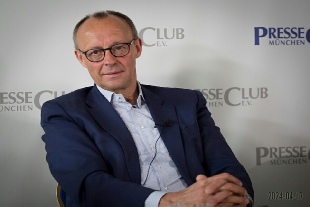
In the wake of Donald Trump's threats to Spain for condemning his attack on Iran, we've seen two very different approaches to diplomacy emerge within the EU. Germany's chancellor Friedrich Merz, who was sitting next to Trump in the Oval Office during his embarrassing tirade against Madrid, has avoided public confrontation with the US president. For sitting in silence during that meeting, Merz has been strongly criticised by the Spanish government, certain members of which favour a more explosive style of diplomacy. Labour minister Yolanda Díaz's attack on Merz and the EU this week made Pedro Sánchez's
'No to war' speech look half- Harsh, no? Díaz is right to call on the EU to not mindlessly endorse everything Trump
does. But the best way to oppose American foreign policy is through considered diplomacy,
not unscripted verbal battles. Merz's critics have slammed him for not rising to
the occasion in that bizarre meeting, but the opposite was true: he rightly refused
to lower himself to the infantile level of Trumpian diplomacy. Off- |
|
|
meeting, he apparently informed his host that economic sanctions cannot be imposed
on individual EU members. It was the equivalent of keeping the unruly class idiot
behind for a telling- After attacking Merz and the EU, Díaz praised her government for defending "human
rights, dignity and decency around the world". Similarly, Sánchez's condemnation
of Iran's Khamenei regime, which has committed countless human rights violations
since taking power in 1989, was cursory compared to his diatribe against America
and Israel. No wonder the Spanish government has won a friend in Iranian president
Masoud Pezeshkian - One wonders how often Díaz will speak out against the abuses of dignity and decency that are likely to continue under Mojtaba Khamenei, who became Iran's Supreme Leader after his father's assassination. The Khamenei regime would be a target deserving of her outrage; Merz, whose understated approach to diplomacy has been misinterpreted as subserviency, is not. |