|
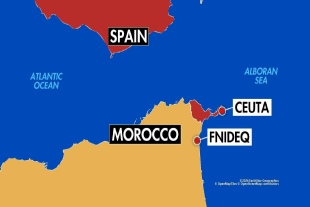
EU interior ministers met via video call on Tuesday to discuss the migrant influx into Ceuta last Thursday. The consensus seems to have been that Spain handled the situation well, but that Europe needs tougher controls on its external borders. Spain’s regularisation scheme for half a million undocumented migrants has also come under attack, even though it’s implausible to claim that it was a direct cause of events in Ceuta last week. Magnus Brunner, the EU Commissioner for migration, said that Spain’s regularisation initiative was not discussed at Tuesday’s meeting, but that it was “definitely not a good signal for the rest of Europe”. The scheme, which was enacted by Royal Decree in April, was also criticised in a letter to the EU leadership signed by 22 countries ahead of the meeting. Signatories of the letter (which included Germany and Italy but not France) stressed the EU’s “duty to effectively deter and relentlessly combat illegal migration”, in part by opposing any “policies that can serve as pull factors, such as the regularisation of [a] very large number of illegal migrants”. Italy has emerged as Pedro Sánchez’’s strongest critic over Ceuta, despite receiving almost double the number of illegal immigrants than Spain last year (66,328 compared to 36,683). If anyone swam to Spain from Morocco last week believing they would benefit from
Sánchez’s one- |
|
|
(and I think that’s unlikely), they would have been badly mistaken. The scheme offered residency and work permits to migrants who could prove that they were resident in Spain before January 1, and who had been in the country for five consecutive months at the time of application. The deadline for applications was over a month ago. You can imagine the letters’ signatories dismissing this as too literal- Sánchez was right to object to this fudging of the issue in his own letter to the EU leadership. The argument made by his critics might have had some force if the Ceuta arrivals could have benefited from his scheme; but none would have been eligible, even if the deadline hadn’t already passed. Imagine that a poll was conducted of the Ceuta migrants, and it was found that the majority had (mistakenly) believed that scrambling into Spain would qualify them for the regularisation scheme. Why would that be Madrid’s fault? A country’s government can’t be held responsible for people who wildly misunderstand its immigration laws. |